
Project Team Visits Rural Health Facilities in Ghana
The Moving IMPACT project team recently undertook field visits to communities in Ghana, to explore how mini-grids and electric mobility can support productive uses of electricity, socio-economic benefits and improved access to essential services in remote regions. The activities formed part of a project visit hosted by our partner, University of Energy and Natural Resources (UENR).
Engaging with rural healthcare providers in Bechem
On Wednesday 25th February, the team from Imperial College London, UENR, University of Leeds and Strathmore University travelled to Bechem, where they visited four Community-based Health Planning and Services (CHPS) compounds and one local clinic. These visits provided an opportunity to engage directly with community leaders and healthcare workers to better understand the challenges associated with delivering healthcare services in rural and peri-urban communities.
Discussions highlighted the important role that reliable electricity could play in strengthening healthcare delivery. Opportunities discussed included the use of solar-powered refrigeration for medicines and vaccines, mechanised water pumping, and improved lighting and equipment to support clinical services, particularly for maternal health.
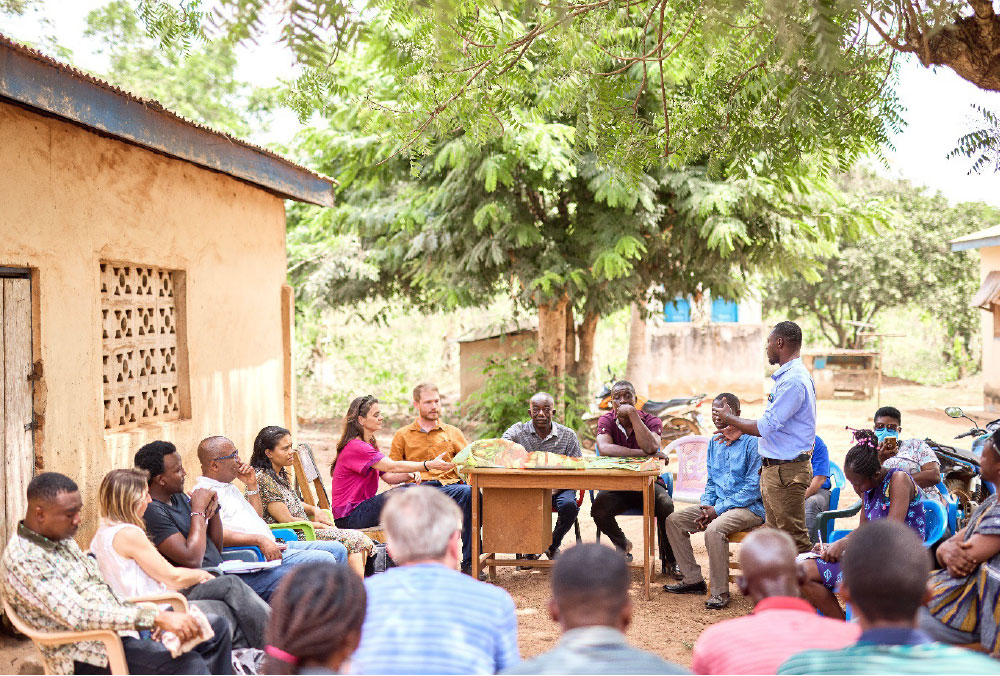
The team also explored potential links between decentralised energy systems and productive uses of electricity, such as exploring the potential for electric mobility solutions to assist with patient transport between remote communities and healthcare facilities. These discussions contribute directly to the objectives of Work Package 0, for assessing the socio-economic impacts of mini-grid implementation, and Work Package 4 (WP4), which focuses on exploring electric mobility solutions. More broadly, the field visits provided valuable cross-cutting insights across the project’s work packages.
The health clinic in Bechem is also envisaged as a potential demonstration site to explore the co-location of solar PV systems with agricultural activities and electric vehicle charging infrastructure, supporting both local livelihoods and healthcare access. This concept links to Work Package 1 (WP1) on agrivoltaics and WP4 on electric mobility, highlighting opportunities to integrate energy, agriculture, and transport solutions in peri-urban communities.
Published:
16th March 2026
